
Aircraft Valuation Tools: Useful Reference or Market Reality?
One of the most common discussions we have with aircraft owners and buyers today revolves around aircraft valuations.
With online tools such as Vref, Aircraft Bluebook, HeliValue$, windsock, AI platforms, forums, Facebook groups and public sales listings, more information is available than ever before. Prospective buyers now arrive at the negotiation table either educated - or believing they are educated. The same applies to sellers.
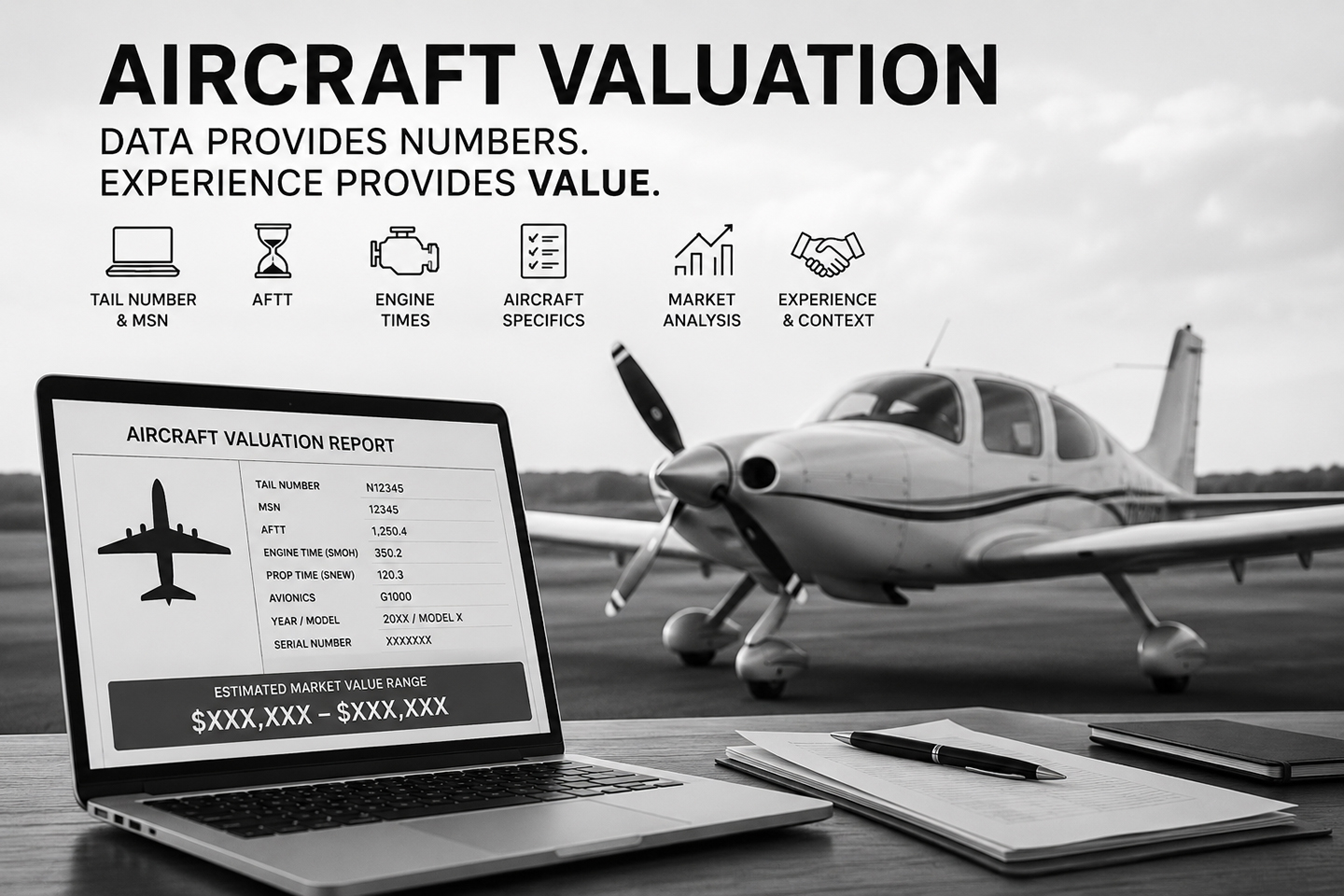
The reality, however, is that aircraft valuation remains far more nuanced than simply entering a tail number, MSN, and aircraft specifics such as airframe total time (AFTT), engine times, avionics, paint/interior condition, and other data into an online valuation platform.
Aircraft valuation tools are useful reference points, but they cannot:
- Inspect the aircraft
- Assess cosmetic presentation
- Evaluate maintenance quality
- Verify the accuracy and continuity of records
- Measure market momentum
- Understand buyer psychology
- Negotiate an actual transaction
Most importantly, they cannot determine what a qualified buyer is truly willing to pay in the current market.
An aircraft may have excellent engine times, strong avionics, and complete records, yet still struggle to sell if:
- The aircraft has stale market exposure
- The presentation is weak
- The pricing strategy is unrealistic
- The aircraft is improperly marketed
Conversely, a properly positioned and professionally represented aircraft often sells faster and closer to its true market value.
This is precisely where experienced aircraft representation matters.
At TSH aviation, we use valuation tools daily — but we do not rely on them blindly. Real market value is established through a combination of:
- Comparable aircraft analysis
- Current inventory
- Buyer activity
- Aircraft condition
- Presentation
- Transactional experience
- Market timing
Aircraft are not commodities. Two seemingly identical aircraft can trade tens, hundreds of thousands, or even millions of dollars apart depending on condition, records, equipment, pedigree, and positioning.
Valuation software provides data.
Experience provides context.
And in aviation transactions, context matters.